Previous technological limitations
The digital representation of Chinese language has been shaped, in part, by the technical conditions under which computers were designed and used.
Early digital environments were strongly oriented toward keyboard input, character encoding, string matching, and Latin-character interfaces. Chinese therefore required additional methods of input and representation. Pinyin provided an efficient phonetic interface through which users could enter Chinese characters on a keyboard.
This was an important technological solution. It did not, however, make pinyin equivalent to the written identity of the language it represented.
The distinction between an input mechanism and an identity representation is central to the question of how Chinese concepts are represented digitally.
From Pronunciation to Identity
Mandarin contains a substantial number of homophones and near-homophones. Different Hanzi can correspond to the same or similar pronunciation while referring to entirely different words, names, and concepts.
When a written expression is represented only through its pronunciation, this distinction is no longer contained in the representation itself. It must instead be inferred from context.
Hanzi preserve the distinction directly. The written characters identify the particular expression being referred to rather than merely specifying how it is pronounced.
Pinyin therefore serves an important functional role, particularly in pronunciation, education, search and input. Its function is different from that of a canonical written representation.
Pinyin represents pronunciation. Hanzi preserve the written identity.
The Keyboard Removed Identity
The widespread use of pinyin in digital environments can make romanization appear to be the natural digital form of Chinese. Historically, however, its importance is closely connected to the practical requirements of computer input.
The keyboard created a bottleneck. A writing system based on thousands of characters had to be made compatible with an interface designed around a relatively small set of keys.
Pinyin provided one way of crossing that bottleneck. The user could enter a phonetic sequence and select the intended character.
The result was an effective input system, but it introduced a separation between the form used to access a concept and the form that constituted its written identity.
The digital representation was therefore optimized for input. Identity could be restored after input.
AI Removes the Bottleneck
Artificial intelligence changes this technological environment.
Contemporary AI systems can process multiple forms of representation, including speech, images, handwriting, documents, and native writing systems. Interaction with a machine therefore no longer has to begin with the manual entry of a character sequence.
A user can speak, photograph, point to, scan, or otherwise indicate an object or expression. The system can then use contextual information to identify what the user is referring to.
This does not make phonetic input obsolete. It changes the technological conditions that once made phonetic mediation particularly important.
As the interface between human intention and machine interpretation becomes less dependent on the keyboard, the question shifts from how efficiently something can be entered to how precisely it can be identified.
What representation preserves the identity
of what humans mean?
AI and Canonical Concepts
The implications extend beyond the representation of individual words.
AI systems increasingly operate across different forms of information and attempt to establish relationships between entities, concepts, categories, and contexts. In such systems, identifying what a reference denotes can be more important than matching an exact string.
This is closely related to the role of canonical identifiers in digital systems. A canonical identifier provides a stable reference that different systems can use to refer to the same entity without repeatedly reconstructing the intended meaning.
The importance of this principle increases when software systems begin to act on behalf of users: navigating information, communicating with institutions, selecting services, or carrying out transactions.
In these contexts, an approximate representation may be sufficient for discovery while a canonical representation may be necessary for reliable identification.
Hanzi as Semantic Anchors
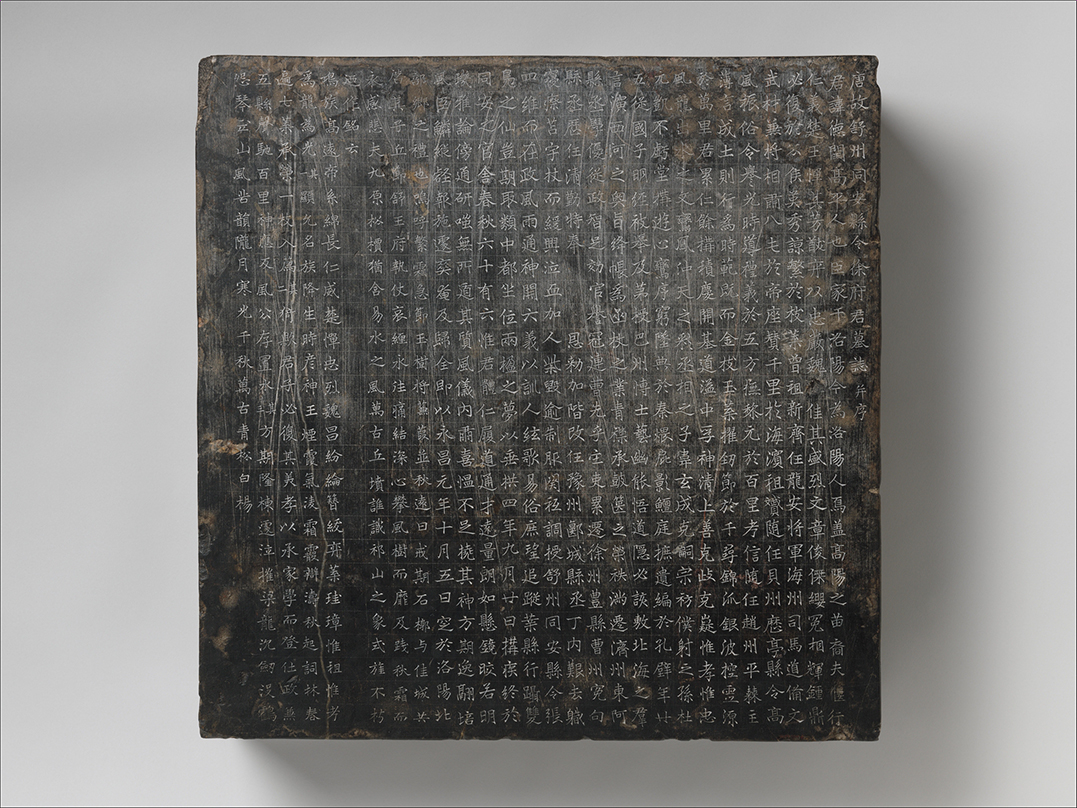
Hanzi have a property that is particularly relevant to this distinction: their written identity is not entirely dependent on pronunciation.
Pronunciation varies across regions, dialects, historical periods, and languages. The same written character can remain recognizable across these differences.
The sound may change.
The grapheme remains.
This gives Hanzi a function beyond the direct representation of speech. They can provide a stable visual reference across different phonetic realizations.
This property was not developed for digital technology, and it should not be interpreted as evidence that Hanzi were somehow designed for artificial intelligence. Rather, the emergence of AI creates a new technological context in which this existing property may become increasingly useful.
What has sometimes been regarded as a distance between Chinese writing and purely phonetic representation can therefore also be understood as a mechanism for preserving distinctions that pronunciation alone cannot reliably preserve.
Reclaiming Identity
The transition from keyboard-based interfaces to increasingly multimodal and semantic interfaces raises a broader question about the hierarchy between access and identity.
In the keyboard era, the romanized form often functioned as the practical point of entry, while the original characters were recovered through an input system.
In an AI-mediated environment, that relationship may increasingly be reversed.
Pinyin can remain an important access layer. It can represent pronunciation and provide an efficient means of entry. But the canonical Hanzi can serve as the underlying identity to which different pronunciations, translations, romanizations, and other surface expressions refer.
The distinction is between access and identity.
One describes how a system reaches something. The other describes what that thing is.
Hanzi preserve identity.
This suggests a different way of thinking about digital language.
The development of digital interfaces has often encouraged different writing systems to adapt themselves to the same technological constraints. AI creates the possibility of a different approach: systems can increasingly adapt to the characteristics of the languages and representations they encounter.
The keyboard age placed emphasis on what could be efficiently entered. The emerging AI environment places greater emphasis on what can be identified, interpreted, and connected across contexts.
If this transition continues, the canonical grapheme may acquire renewed importance as a stable reference beneath the many forms through which language is expressed.
The task is therefore not to digitize identity again but to reclaim the identity that technology temporarily abstracted away.
— Mo Brandi
August 2026